
- November 2, 2026
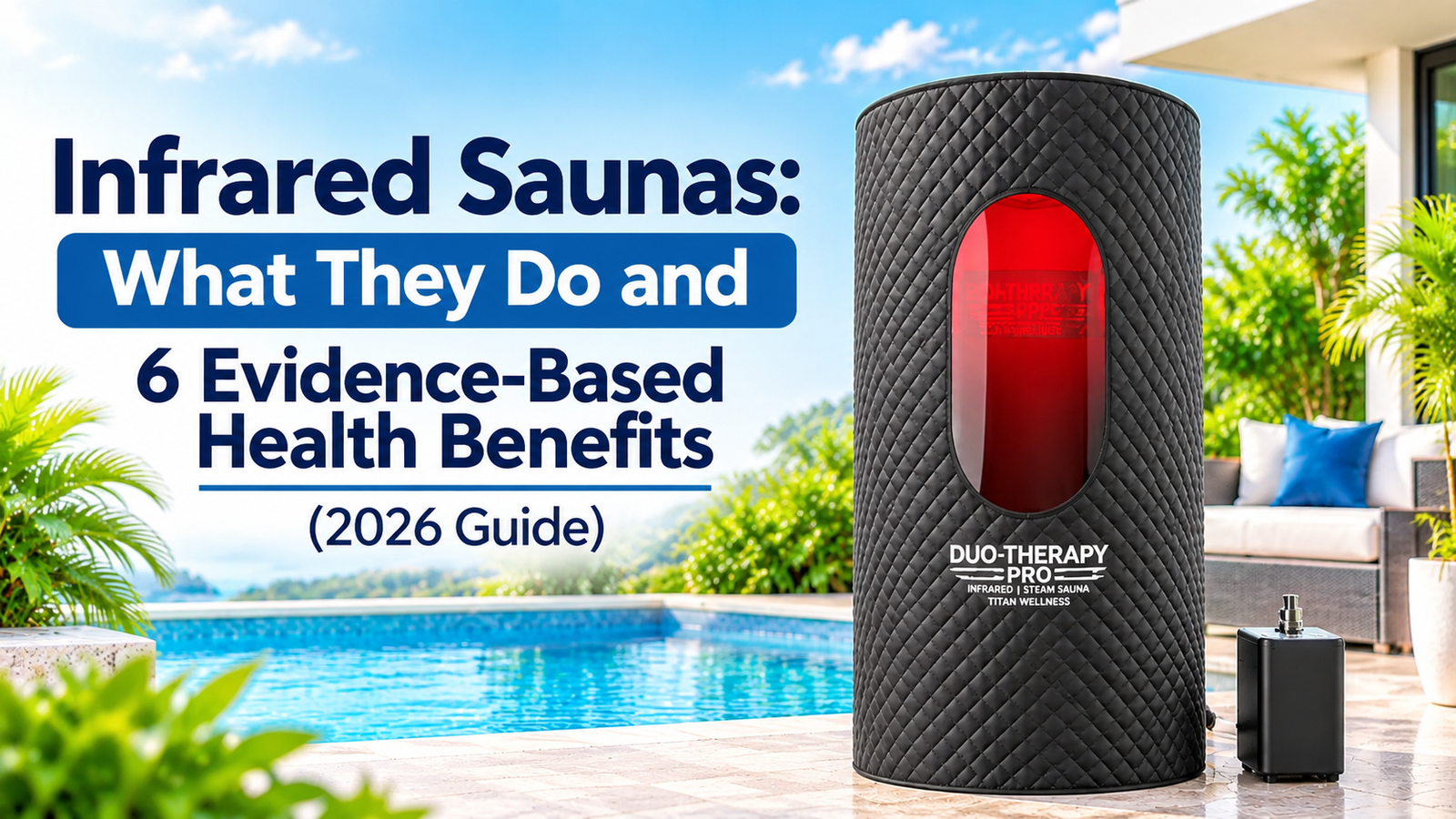
An infrared sauna warms your body directly with infrared light instead of heating the air around you. That’s why you can sweat comfortably even when the air temperature is only about 110°F to 140°F. Research on infrared saunas is also growing fast, and it points to some real upsides. Heart health, muscle recovery, and pain relief have the strongest support so far. Relaxation, better sleep, and immune benefits look promising too, though the evidence for them is still early.
In this guide, we’ll walk through what infrared saunas actually do, which benefits the research backs up, and how to use one well.
What Does an Infrared Sauna Do to the Body?
The panels warm the body directly, and Healthline says skin and core temperature rise before the cabin air heats up much. According to Cleveland Clinic, sweat appears within minutes, blood vessels widen and the heart beats faster. That’s much like a walk at a moderate pace.
Two things set the technology apart. The first is the heat source: glowing panels send warmth straight to the body, so no stove or hot air is needed. The second is the wavelength. Many units use far-infrared, and Mayo Clinic notes that “far” only marks where the waves sit on the light spectrum.
Comfort is the payoff. A user can sit at 120°F for longer than a 180°F room would allow. That makes regular use simpler.
How Is an Infrared Sauna Different From a Traditional Sauna?
The main difference is air temperature. Cleveland Clinic and Healthline put infrared cabins at about 110°F to 140°F, and many people find that easier to handle. They put traditional saunas at about 150°F to 195°F. Either way, body temperature goes up – and a good sweat follows. Where they really differ is the evidence. Traditional saunas have the larger research base.
The best-known heart review, in Mayo Clinic Proceedings in 2018, studied traditional Finnish saunas. Its authors say more research on lower-temperature saunas would add useful detail. Healthline agrees that infrared research is smaller. It also points to early studies on heart health and muscle recovery.
| Feature | Infrared | Traditional | Hybrid (infrared + steam) |
| How heat is delivered | Light warms the body directly | Hot air warms the body | Depends on the selected mode |
| Typical air temperature | About 110°F–140°F | About 150°F–195°F | Varies by mode |
| Research base | Growing | Larger, mostly Finnish studies | Draws on both |
| Often suits | People who prefer gentler heat | People who like intense heat | People who want both options |
What Are the 6 Health Benefits of an Infrared Sauna?
People most often cite SIX benefits. Heart Health. Pain Relief. Relaxation. Better sleep. Fewer colds. The first three have the firmest support. The last three are early but encouraging. The labels below show how each source words its claim. They are not formal evidence grades.
| Benefit | Evidence label | What the sources report |
| Heart health and blood pressure | Promising | Cleveland Clinic and WebMD point to studies linking infrared sauna use with better heart health and lower blood pressure. Mayo Clinic adds that some studies found proof of help – and it calls for larger ones. |
| Sore muscle recovery | Promising | Better blood flow may speed recovery after exercise. Healthline notes research on post-workout use. |
| Pain relief | Promising | Cleveland Clinic cites a two-year study on chronic pain. WebMD reports fewer arthritis and fibromyalgia symptoms for some users. |
| Relaxation and mood | Early | Heat sessions may lower stress, anxiety and depression symptoms. |
| Better sleep | Early | Cleveland Clinic links sauna use to better sleep. |
| Fewer colds | Early | Regular use may support the immune system and help avoid the common cold. |
Does an Infrared Sauna Detox the Body or Burn Fat?
Think of an infrared sauna as a wellness boost, not a detox treatment. Your liver and kidneys are already doing the job of clearing out what your body doesn’t need, as WebMD explains. Cleveland Clinic adds that research on sweating out metals such as lead and cadmium is still early.
Weight works the same way. Healthline says an infrared sauna does not burn body fat. WebMD adds that one small study saw fat loss during regular use, though the sauna wasn’t the only factor. So the real draw lies elsewhere. Sessions offer relaxation, better circulation and a little quiet time. Anyone curious about the skin and sweat angle can read Titan Wellness’s guide to sauna for detox and skin hydration.
How Long and How Often Should Someone Use an Infrared Sauna?
Beginners should start near 110°F for 5 to 10 minutes. Sessions should stay under 30 minutes, and use should stay at three to four times a week. Cleveland Clinic and WebMD agree on these limits. Healthline suggests 15 to 20 minutes per session and also cites three to four days a week.
The safe window is about 15 to 30 minutes. There is time to work up at a steady pace. Drinking fluids is important as well. People should have water before starting and then again while it is going on. Avoid alcohol. Afterward, rinse off. The steps below show one way to follow those limits. This is just an example, not medical advice.
| Week | Air temperature | Session length | Sessions per week |
| 1 | About 110°F | 5–10 minutes | 2 |
| 2 | 115°F–120°F | 10–15 minutes | 2–3 |
| 3 | 120°F–130°F | 15–20 minutes | 3 |
| 4 | 120°F–135°F | 15–25 minutes | 3–4 |
Who Should Not Use an Infrared Sauna?
Most healthy adults do fine in an infrared sauna, and Mayo Clinic says no harmful effects have been reported. Not everyone should just hop in, though. People with multiple sclerosis should skip it or check with a doctor first. Same goes for anyone who’s pregnant, trying to conceive or ill. Early pregnancy needs extra care. The concern is heat.
According to the American College of Obstetricians and Gynecologists, a higher core temperature may affect the fetus. Healthline adds that people with low or high blood pressure, or heart disease, need a doctor’s clearance first.
Dehydration and lightheadedness are the most common issues, and drinking water helps prevent both. If dizziness or nausea shows up, it’s simply time to step out of the cabin.
Pairing heat with cold is a popular routine. The 2018 Mayo Clinic Proceedings review calls it generally safe for healthy people. One note applies to heart disease. Anyone with it should get medical guidance before switching fast between heat and cold. Cleveland Clinic offers similar advice for cold plunging, and it adds high blood pressure to the list. Either way, a quick chat with a provider comes first.
Can a Home Infrared Sauna Fit Into a Recovery Routine?
Yes, for healthy adults who use it steadily and stay within the limits above. The format matters, though. Single-mode infrared cabins suit heat-only routines. Hybrids add steam. Some users follow heat with a cold plunge, and Cleveland Clinic notes that people may try a sauna after a plunge.
Titan Wellness makes one hybrid option, the Sauna Duo-Therapy Pro. This 2-in-1 cabin runs in infrared or steam mode. It has a built-in 660nm red light panel and a rigid steel frame with multi-layer insulation. A hybrid lets one household use infrared on recovery days and steam on other days, with no second unit. Titan’s Duo-Therapy Pro review and contrast therapy setup guide cover space, power and routines in more detail.
The Bottom Line
Infrared saunas give users a gentler kind of heat, and the science behind them is still catching up. So far, heart, muscle and pain benefits have the most support. Relaxation, sleep and immune benefits look promising, but the evidence there is early. The routine itself is simple. Short sessions, plenty of water, and a quick word with a doctor for anyone with a health condition. Prefer to sauna at home? Titan Wellness offers the Sauna Duo-Therapy Pro, a cabin that pairs infrared and steam.
Frequently Asked Questions About Infrared Saunas
Is an infrared sauna safe to use every day?
A lot of places recommend going about three to four times each week. Some people still use it daily and feel fine, according to Healthline. That said – bodies do not all react the same way. If you have a medical issue, ask a clinician first before you make daily sauna time part of your routine.
Can an infrared sauna replace exercise?
Not completely. It can work alongside exercise, though. A review in Mayo Clinic Proceedings from 2018 says sauna use can be a helpful add-on to exercise. It may be especially useful for people who struggle to be active.
Does an infrared sauna lower blood pressure?
Some studies show short-term drops in blood pressure, WebMD and Cleveland Clinic report. The Mayo Clinic Proceedings authors call sauna a pleasant lifestyle measure, and they expect further research to confirm more. They’re clear on one point, though. Sauna works alongside medical care.
RECENT BLOGS
- November 3, 2026
Sauna Before Or After Ice Bath: Which Should I Do First?
- November 2, 2026
Infrared Saunas: What They Do and 6 Evidence-Based Health Benefits (2026 Guide)

- October 26, 2026
Best Affordable Cold Plunge for Home Guide: 7 Picks Compared

- October 14, 2026
Infrared vs Steam Sauna: Which Mode Should You Use and When?
More Blogs
Recent Blogs
Sauna Before Or After Ice Bath: Which Should I Do First?
- November 3, 2026
Most healthy adults start with the sauna and finish with the cold plunge. Heat first makes the cold easier to enter, and ending on cold is the usual routine in contrast therapy. Here’s the useful part: the order isn’t fixed. It moves with the goal, the clock and whatever came before, like a workout. Researchers haven’t lined the two sequences
Read More
Infrared Saunas: What They Do and 6 Evidence-Based Health Benefits (2026 Guide)
- November 2, 2026
An infrared sauna warms your body directly with infrared light instead of heating the air around you. That’s why you can sweat comfortably even when the air temperature is only about 110°F to 140°F. Research on infrared saunas is also growing fast, and it points to some real upsides. Heart health, muscle recovery, and pain relief have the strongest support
Read More
Best Affordable Cold Plunge for Home Guide: 7 Picks Compared
- October 26, 2026
The best affordable cold plunge for home use are generally an inflatable tub + chiller. That pairing keeps the water cold without ice runs, and it costs far less than a hard-shell tub. Titan Wellness has seven setups using this concept, starting from $578 and going up to $4,190 in price. Three factors decide which one fits: The sections below
Read More
Infrared vs Steam Sauna: Which Mode Should You Use and When?
- October 14, 2026
Infrared vs steam sauna comes down to heat style. Infrared warms the body directly at lower air temperatures, which suits longer, calmer sessions. Steam wraps the body in humid heat, which suits shorter, more intense ones. Research has not shown that either type is healthier, so the better mode is the one a person will use consistently. What Is the
Read More