
- November 3, 2026
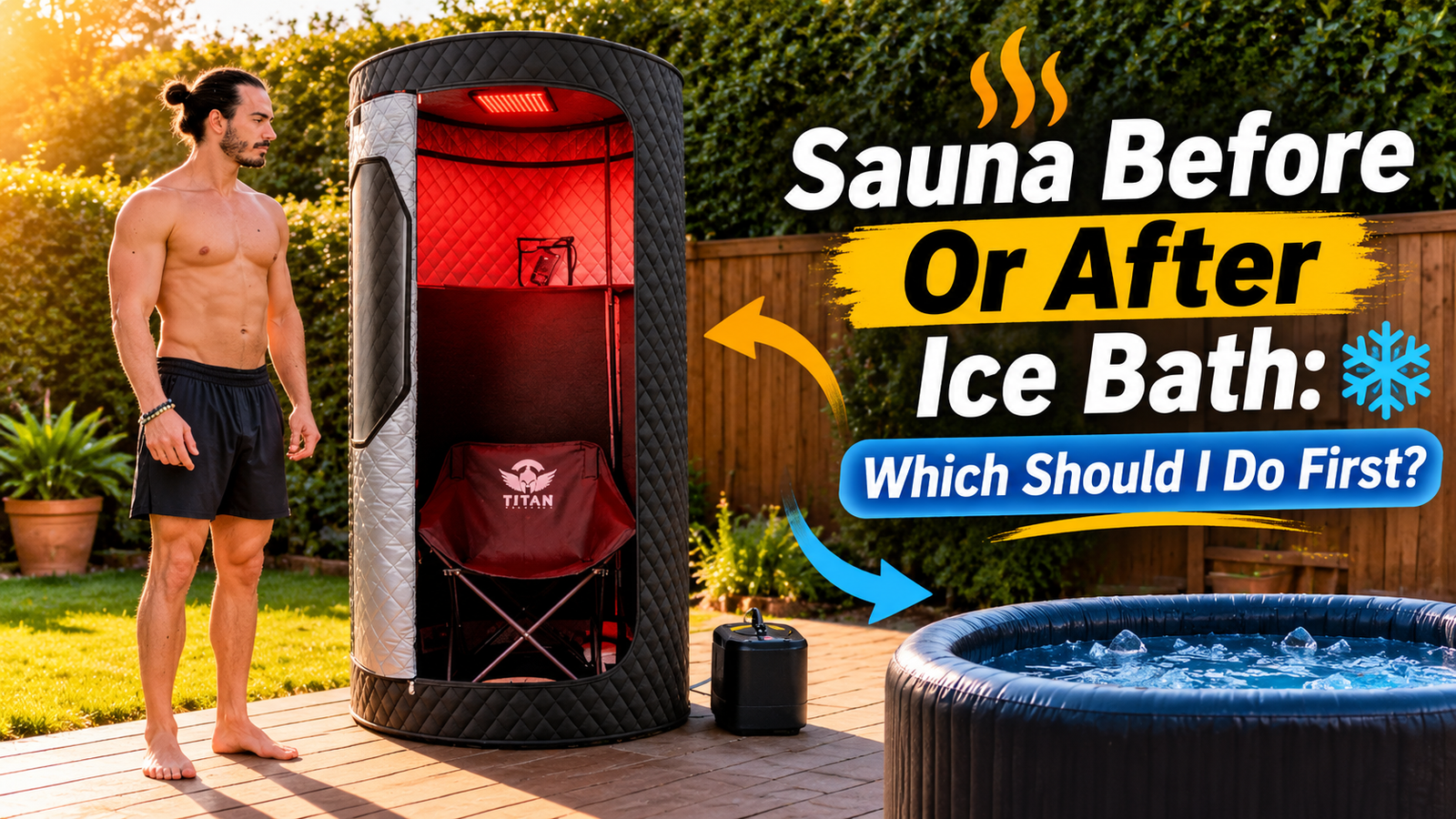
Most healthy adults start with the sauna and finish with the cold plunge. Heat first makes the cold easier to enter, and ending on cold is the usual routine in contrast therapy. Here’s the useful part: the order isn’t fixed. It moves with the goal, the clock and whatever came before, like a workout. Researchers haven’t lined the two sequences up head to head yet, so the practical details matter most. Those are below, short and by situation, along with the temperature and time ranges that make a session comfortable.
Should You Do a Sauna Before or After an Ice Bath?
A sauna before an ice bath is the most common order, and it suits most healthy adults. Heat widens blood vessels and warms the body, so the cold feels less harsh afterward. Studios follow the same pattern. At Sauna Culture in Charlotte, Axios reports that sessions run about 15 minutes in the sauna, then one to five minutes in the tub, repeated a few times. One of the studio’s founders says ending on cold fits a goal of energy or metabolism.
Sauna first, then the plunge. That’s the routine, and it didn’t start in a lab. It started with Scandinavian winter swimmers, who mix hot sauna sessions with quick dips in cold water. The plunge is the bit that wants a little respect. Cleveland Clinic notes that cold water makes the breath come faster and the heart work harder – which is why it keeps a plunge to five minutes at most. Brand new to it? Stay in for less. Add time as it starts to feel easier.
Can You Do an Ice Bath Before a Sauna?
Yes, you can do it, and it works. For many healthy adults, a cold session first and a sauna after that is a good option too. Cleveland Clinic says a sauna after a cold plunge is worth trying. The reason is simple. A warm cabin heats the body back up fast, so there’s no standing around in a towel waiting to feel normal again.
The cold-first order also fits people who tolerate heat poorly, since the sauna session starts from a cooler baseline. The tradeoff is the finish. Ending on heat leaves most people calm and warm. Ending on cold leaves the nervous system more alert. Neither is wrong. They simply point toward different goals, which the next section lays out.
What comes after the plunge matters as much as the plunge. Dry off fast, get into something warm (that’s Cleveland Clinic’s advice), and let the sauna finish the job if it’s next on the list. A quick check-in with the body helps, too. Feeling lightheaded or just not right? The clinic says to get out of the water rather than push through.
Does the Best Order Change by Goal, Workout or Time of Day?
Yes. The final step should match the goal, and workout timing can override everything else. The Sauna Culture founder told Axios that after 5 p.m., a session should end in the sauna, because the energy lift from cold can keep a person awake. Cleveland Clinic adds a training rule. A plunge within four hours of a muscle-building workout can interfere with gains – because the same cold that reduces inflammation can quiet muscle-building signals.
Few guides combine these two rules. Together, they form a simple decision tool.
| Goal or situation | Suggested order | Reason | Source |
| Daytime energy or metabolism | Sauna, then cold plunge | Cold finish leaves the body alert | Axios |
| Evening, with sleep in mind | Finish in the sauna | Energy lift from cold can delay sleep | Axios |
| Same-day strength training | Wait at least four hours before any plunge | Cold may blunt muscle-building signals | Cleveland Clinic |
| Rest day recovery | Either order | Cold may still help recovery between workouts | Cleveland Clinic |
| Beginner or heat-sensitive | Short sauna, then a one-to-two-minute plunge | Lower stress while the body adapts | Cleveland Clinic |
How Long Should Each Step Last, and How Cold Should the Plunge Be?
How long should you stay in? For heat, 15 to 20 minutes is the usual range. For cold, five minutes at most. Cleveland Clinic backs that same heat window, but suggests just five minutes if it’s your first time. And if you’re a beginner on the cold side, start with water at 50 to 59°F. Keep it at 40°F or warmer, and be out by the five-minute mark, every time.
Numbers vary a lot. Finnish-style saunas, the kind much of the research leans on, run hot and dry. Cleveland Clinic gives 150 to 195°F for traditional ones and 110 to 135°F for infrared. Home cabins sit nearer the gentle end. Titan Wellness lists its Sauna Duo-Therapy Pro at up to 150°F, which is right where one verified Titan customer likes it: 20 minutes at 150° every night, plus a four-minute plunge at 50° each day. Cold has a spread too. The Charlotte studio keeps tubs at 40, 45 and 50°F, so experienced plungers mostly live near 40 to 50°F.
| Step | Typical range |
| Traditional sauna | 150 to 195°F |
| Infrared sauna | 110 to 135°F |
| Sauna session | 15 to 20 minutes (5 for beginners) |
| Beginner plunge temperature | 50 to 59°F, never below 40°F |
| Plunge length | 1 to 2 minutes for beginners, 5 minutes maximum |
Is It Safe to Go Straight From a Sauna to a Cold Plunge?
Heat to cold is a big contrast, and the body notices. Breathing speeds up, and heart rate and blood pressure rise for a bit. The American Heart Association calls it the cold shock response, and it eases as the body gets used to cold. Easing in, with the head above water at first, keeps things calm. The American Lung Association suggests running the plan by a provider first, and Dr Jorge Plutzky of Brigham and Women’s Hospital advises extra care for anyone with a cardiac history.
Check with a doctor first if you have heart disease, high blood pressure, diabetes or poor circulation, or if you’re pregnant. That’s Cleveland Clinic’s advice. Duly Health and Care adds two basics. Never plunge alone. Keep warm clothes and a warm drink within reach. The same source advises two to four glasses of water after a sauna. UVM Health gives the same advice on the company.
What Does Research Actually Say About the Order?
No study has compared sauna-first with cold-first. The work most often cited for ending on cold is a 2021 Cell Reports Medicine study led by Susanna Søberg. It followed eight young men who had alternated cold-water dips with sauna sessions for at least two years. The swimmers logged roughly 11 minutes in cold water per week. When cooled, they burned more energy than controls, yet their brown fat was no more active. The finding was better thermoregulation, not a benefit tied to sequence.
The study was small, observational and limited to men, so it cannot show that either order wins. UVM Health cardiologist Hanna Slim, MD, adds that many cold plunge studies are small or observational, so some claims about immunity and muscle recovery are still being explored. So here’s the practical takeaway. A steady routine, safe session lengths and a final step that suits the goal matter more than the order alone.
How Can a Home Setup Make the Routine Easier?
A home setup removes the biggest friction: the gap between steps. At a studio, the sauna and tub sit steps apart. At home, ice, towels and water prep add delay. A cold plunge chiller holds water at a set temperature, so a 50 to 59°F plunge is ready on schedule. Titan Wellness chillers offer app control and scheduling for that purpose. Placement helps too. A short walk between sauna and tub keeps the transition quick and limits time spent cooling off in between. For tighter spaces, this breakdown of the best Titan cold plunge for a home gym shows which model fits which room size and budget.
For heat, the Titan Wellness Sauna Duo-Therapy Pro offers infrared or steam in a plug-in cabin with a built-in red light panel. It runs one mode per session. Readers weighing both pieces can see Titan’s infrared versus steam guide, its chiller buying guide, or the contrast therapy bundles.
What Is the Best Order in the End?
The best order is simply the one you can keep repeating safely. For most healthy adults – that’s sauna first and cold second. From there, tweak it to suit your goal, the time of day and your training. One firm caveat: if you have heart, blood pressure or pregnancy concerns, speak with a provider before you try either. This article is educational and isn’t medical advice.
Sauna and Cold Plunge: Common Questions
How often should someone do sauna and cold plunge together?
If you’re a beginner, Cleveland Clinic suggests plunging once or twice a week and adding days as your body adapts. Some people tolerate a daily plunge. But what’s safe for you? A provider can help you work out the right frequency.
What should someone do right after a cold plunge?
Dry off, change into warm clothes and have a warm drink within reach, per Duly Health and Care. A plunge should not happen without rewarming supplies nearby.
Is it safe to use a sauna after drinking alcohol?
No. Cleveland Clinic and the American Lung Association both say to skip it. Alcohol makes dehydration more likely, and it raises the risk of blood pressure drops too, which is a bad mix with a hot sauna.
RECENT BLOGS
- November 3, 2026
Sauna Before Or After Ice Bath: Which Should I Do First?

- November 2, 2026
Infrared Saunas: What They Do and 6 Evidence-Based Health Benefits (2026 Guide)
- October 26, 2026
Best Affordable Cold Plunge for Home Guide: 7 Picks Compared

- October 14, 2026
Infrared vs Steam Sauna: Which Mode Should You Use and When?
More Blogs
Recent Blogs
Sauna Before Or After Ice Bath: Which Should I Do First?
- November 3, 2026
Most healthy adults start with the sauna and finish with the cold plunge. Heat first makes the cold easier to enter, and ending on cold is the usual routine in contrast therapy. Here’s the useful part: the order isn’t fixed. It moves with the goal, the clock and whatever came before, like a workout. Researchers haven’t lined the two sequences
Read More
Infrared Saunas: What They Do and 6 Evidence-Based Health Benefits (2026 Guide)
- November 2, 2026
An infrared sauna warms your body directly with infrared light instead of heating the air around you. That’s why you can sweat comfortably even when the air temperature is only about 110°F to 140°F. Research on infrared saunas is also growing fast, and it points to some real upsides. Heart health, muscle recovery, and pain relief have the strongest support
Read More
Best Affordable Cold Plunge for Home Guide: 7 Picks Compared
- October 26, 2026
The best affordable cold plunge for home use are generally an inflatable tub + chiller. That pairing keeps the water cold without ice runs, and it costs far less than a hard-shell tub. Titan Wellness has seven setups using this concept, starting from $578 and going up to $4,190 in price. Three factors decide which one fits: The sections below
Read More
Infrared vs Steam Sauna: Which Mode Should You Use and When?
- October 14, 2026
Infrared vs steam sauna comes down to heat style. Infrared warms the body directly at lower air temperatures, which suits longer, calmer sessions. Steam wraps the body in humid heat, which suits shorter, more intense ones. Research has not shown that either type is healthier, so the better mode is the one a person will use consistently. What Is the
Read More