
- October 12, 2026
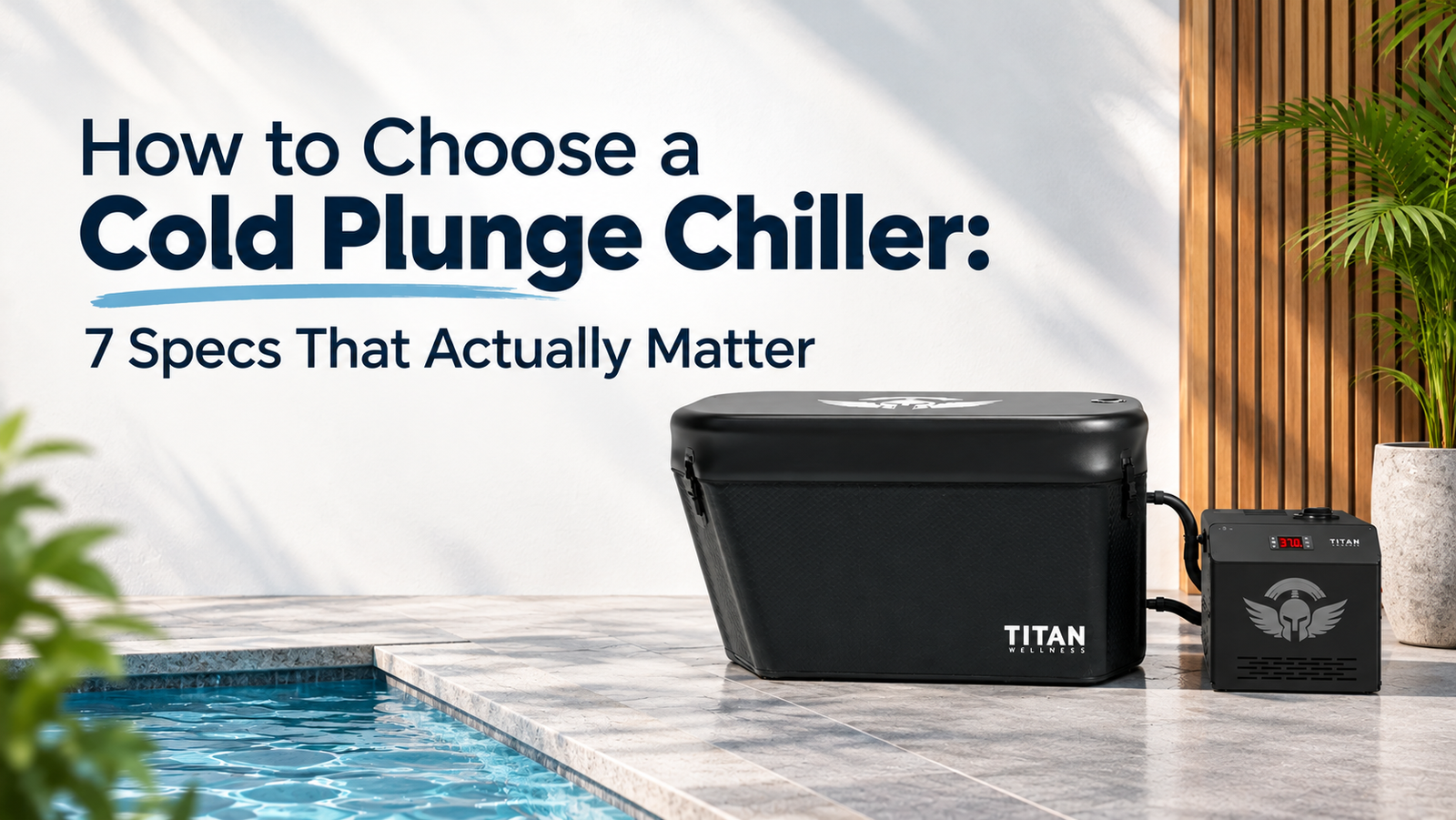
Here’s the thing about choosing a cold plunge chiller (often called an ice bath chiller) for home use: most people get stuck comparing tub size, price, and how good the unit looks. Fair enough, but none of that decides whether you’ll still be happy with it three months later. Seven specs do. BTU cooling capacity and horsepower tell you how hard the machine can really work.
Then comes the lowest temperature it can hit, and what it costs to run every single day. Filtration and sanitation deserve more of your attention than they usually get. You’re sitting in that water, after all. Noise is the sneaky one. Nobody thinks about it until the chiller is humming under the bedroom window at 6 a.m. Last on the list is connectivity: app control, scheduling, that kind of thing. Handy, but the least urgent of the seven.
But if you only ask one question, make it this: Will it hold my set temperature on a scorching afternoon, or after a packed week of training? If a chiller can’t do that, it doesn’t matter how good it looks or how quiet it is.
Use this buying guide to check these seven numbers before anything else, and you’ll rarely end up disappointed.
What BTU Rating Does a Cold Plunge Chiller Need?
Every cold plunge chiller has a BTU number on the label, and that number is its cooling capacity. It’s worth knowing what it actually means. BTU, short for British Thermal Unit, is how much heat the unit can pull out of your water in one hour. For a home tub, you’ll usually be looking at something between 3,000 and 9,000 BTU/hr. Where you land depends on two things: the volume of your tub and the climate you live in. A higher number cools the water down faster. It also gives the chiller a better shot at holding your temperature when peak summer is working against it.
Here’s the math, and it’s simpler than it looks. Take the water volume in gallons and multiply it by 8.34, which is what a gallon of water weighs in pounds. Then multiply that by how many degrees Fahrenheit you want to drop. The result is your cooling load in BTU. Say you’ve got a 100-gallon tub and you want to pull the water down by 30°F. That means roughly 25,000 BTU of total heat has to come out before you hit your number.
Now, the chiller’s BTU/hr rating doesn’t decide whether that’s possible. It only decides how long you’ll wait. A unit rated at 7,500 BTU/hr, which is pretty common on residential chillers, gets that same tub to target temperature in a few hours, not a full day.
If your tub holds more than 150 gallons, or your garage regularly climbs past 90°F in summer, go up a size on BTU. Never down. An undersized chiller in those conditions will spend the whole season struggling to keep up.
How Many Horsepower Does the Chiller Need to Be?
When sizing chiller horsepower for a cold plunge, most home tubs under 150 liters (about 40 gallons) do fine with a 1/4 to 1/3 HP chiller. Larger setups, in the 300 to 400 liter range, or anything installed in a hot climate, perform better with a 1/2 HP or 1 HP cold plunge chiller.
Horsepower and BTU rating move together, but they answer slightly different questions. BTU tells you cooling capacity. Horsepower tells you how hard the compressor works to deliver it. Here’s roughly what each size draws. A 1/3 HP compressor pulls about 280 watts. A 1/2 HP unit uses around 500 watts, and a full 1 HP unit comes in near 750. Titan Wellness builds its chiller lineup around exactly this. There are three tiers, 1/3 HP, 1/2 HP, and 1 HP, so you can match the power to your tub. Go too big and you’re paying for capacity you’ll never use. Go too small and you’ll spend the whole summer fighting the heat.
The practical rule: undersized horsepower doesn’t fail outright. It just runs constantly and struggles to recover after each session.
What Temperature Can a Cold Plunge Chiller Actually Reach?
Most home chillers bottom out somewhere between 37°F and 39°F. That’s the coldest they can go. But it’s not where most people actually plunge. The typical cold plunge temperature range people use day to day is 39°F to 55°F. And that floor number on the spec sheet? It only holds under ideal conditions, so don’t read it as the temperature a beginner should aim for.
If you’re new to cold plunging, start around 55°F to 59°F. Don’t rush it. Over several weeks, as your body gets used to the cold, you can work your way down. People who plunge for performance usually stay in the 39°F to 45°F range. That’s where a chiller that can reach 37°F earns its keep, because it leaves you room to move. It doesn’t mean every session should target that number. This distinction matters more than most spec sheets let on, and it’s worth checking before assuming “colder chiller” automatically means “better chiller.
How Much Does It Cost to Run a Cold Plunge Chiller Each Day?
To understand cold plunge electricity cost, picture a mid-size 1/2 HP chiller that never switches off. Not for a minute, for a full 24 hours. It draws about 500W, which works out to 12 kWh a day. Now use the U.S. average residential rate, 18.56 cents per kWh as of March 2026, and the total comes to roughly $2.23 a day (12 × $0.1856). Sounds like a lot, doesn’t it? Here’s the thing, though: that’s not what owners say they pay. Most put it at $0.50 to $1 a day. So don’t treat the worst-case figure on a spec sheet as your real bill. The gap between the two is worth understanding before you decide anything.
The reason for the gap is duty cycling. A well-insulated tub doesn’t need its compressor running around the clock. The thermostat shuts the compressor off once target temperature is reached and only kicks back on as the water drifts warmer. A chiller with a 25 to 35% duty cycle in a properly insulated tub uses a fraction of the “24 hours straight” math, which is why real-world reports and published estimates, including Titan Wellness’s own figure of roughly $0.50 to $1 per day, consistently land well under the worst-case number.
In a cold plunge chiller vs ice comparison, the gap widens even further. A single cold plunge session typically needs several bags of ice to meaningfully drop water temperature, and three sessions a week can run $60 to $100 a month in ice alone before factoring in the trips to buy it. A chiller’s monthly electricity cost, even on the higher end, tends to land below that, while also removing the chore of sourcing and hauling ice every session.
Does a Cold Plunge Chiller Need Separate Filtration and Sanitation?
Yes. A chiller’s job is to cool water, not clean it. Filtration and sanitation are separate systems that either come built into the unit or need to be added. Without them, still water in an insulated tub becomes a place for bacteria and biofilm to build up within days, regardless of how cold it is.
Start with the filter. Look for a chiller that has a built-in 20-micron (or finer) filter, because that’s the standard baseline for home units. If you want another layer of protection, ozone or UV sanitation is worth having. It also means less scrubbing for you. Plan on swapping the filter cartridge every three to six months. How often depends on how much you use the tub, and whether it sits indoors or out where leaves and dust can get in. And here’s the part people don’t like to hear: skipping this spec to save a few dollars is the regret first-time buyers mention most. You’ll see the same complaint come up again and again in cold plunge owner communities.
How Loud Is a Cold Plunge Chiller?
Most home cold plunge chillers land somewhere between 50 and 60 dBA. Think of a running dishwasher or a window AC. A number you’ll see a lot for compact units is 56 dBA. In a garage or out in the backyard, that’s easy to live with. In a small indoor room, or next to a bedroom wall? You’ll hear it.
Where you put the chiller matters just as much as the number on the spec sheet. Take that same 56 dBA unit. On a concrete garage floor, it won’t sound the same as it does on a wood-frame indoor platform. Why? Because vibration travels through the structure. So if you’re setting up indoors, in an apartment, or against a shared wall and want a quiet cold plunge chiller, make noise a hard filter from the start, not something you check at the end. And put the chiller on a rubber isolation pad either way, whatever the published rating says.
Is Wi-Fi or App Control Worth Paying For?
For anyone who plunges on a fixed daily schedule, app control on a smart cold plunge chiller is a convenience. A manual dial does the same job. For anyone with an irregular schedule, shared household use, or a chiller installed somewhere inconvenient to walk up to, app control earns its cost by letting the water hit target temperature before they arrive.
The added value is mostly about timing and monitoring, not raw performance. A Wi-Fi enabled chiller doesn’t cool water any faster than a manual one with matching HP and BTU specs. It does, however, make it easier to catch problems early: most app-connected units send an alert if the pump stops circulating or the temperature drifts outside the set range, which a manual chiller simply won’t flag on its own.
Cold Plunge Chiller Size Guide: Spec Comparison
Use this chiller size guide to match capacity to your tub volume.
| Spec | Compact (1/3 HP) | Mid-Size (1/2 HP) | High-Output (1 HP) |
| BTU/hr | ~3,500–4,500 | ~6,000–7,500 | ~9,000+ |
| Power draw | ~280W | ~500W | ~750W |
| Best tub size | Under 150 L (40 gal) | 150–300L | 300–400L+ |
| Temperature floor | ~39°F | ~37–39°F | ~37°F |
| Typical noise | ~50–54 dBA | ~55–58 dBA | ~58–60 dBA |
| Est. daily electricity cost | ~$0.40–$0.70 | ~$0.50–$1.00 | ~$0.80–$1.50 |
Cost estimates based on the March 2026 U.S. average residential electricity rate of 18.56 cents/kWh and typical 25–35% duty cycling in an insulated tub. Actual cost varies by climate, insulation, and local electricity rates.
Buyers who want a closer look at how tub insulation and setup affect these numbers in practice can read more in Titan Wellness’s guide to common cold plunge mistakes, and those still deciding between chiller-based and ice-based cooling may find this comparison of ice baths and cold plunges useful before committing to either setup.
Choosing the Right Chiller
The seven specs above (BTU, horsepower, temperature floor, running cost, filtration, noise, and connectivity) are what count. Not the brand name. Not the marketing claims. The best cold plunge chiller for home use is one that’s sized right for your tub, has real filtration, and is quiet enough for the spot where it’ll sit. It will beat a pricier unit that doesn’t suit your space. Titan Wellness builds its chiller lineup around exactly that idea. There are three tiers, 1/3 HP, 1/2 HP, and 1 HP, so you pick the capacity that fits your tub instead of guessing. Those ready to compare tiers against tub volume can view Titan Wellness’s cold plunge chiller options directly.
Frequently Asked Questions
What size chiller do I need for a 100-gallon tub?
For a 100-gallon tub, think 1/3 to 1/2 HP, or roughly 6,000 to 7,500 BTU/hr. That works if your summers are mild and the tub is decently insulated. Live somewhere hot? Or does your tub sit in the sun? Go with the bigger one.
Can a cold plunge chiller run outdoors in winter?
Yes, right up until it freezes. Most chillers are fine outside above freezing. Once it hits 32°F or colder, unplug it and drain it. Water left in the lines can freeze, and that’s how internal parts get damaged. Don’t skip this step.
How cold should a beginner set their first cold plunge?
Not as cold as you might think. Start at 55 to 59°F for your first few sessions. Once that feels easy, go a bit colder. Skip the sub-40°F water for now. You can work up to it.
Will any chiller work with any cold plunge tub?
Usually, yes. Most standalone chillers use standard hose fittings, so they fit most tub brands. Still, check three things before you buy: your tub’s volume, how well it’s insulated, and the plumbing you already have. Then match all three against the chiller’s rated capacity.
How long does it take a chiller to cool a tub to target temperature?
The first cooldown is the slow part. It depends on four things: the chiller’s BTU rating, how much water is in the tub, how warm that water is at the start, and how hot the air is around the unit. Expect anywhere from a few hours to a full day. After that, it’s easy. Holding your target temperature uses far less energy than getting there.
RECENT BLOGS
- October 14, 2026
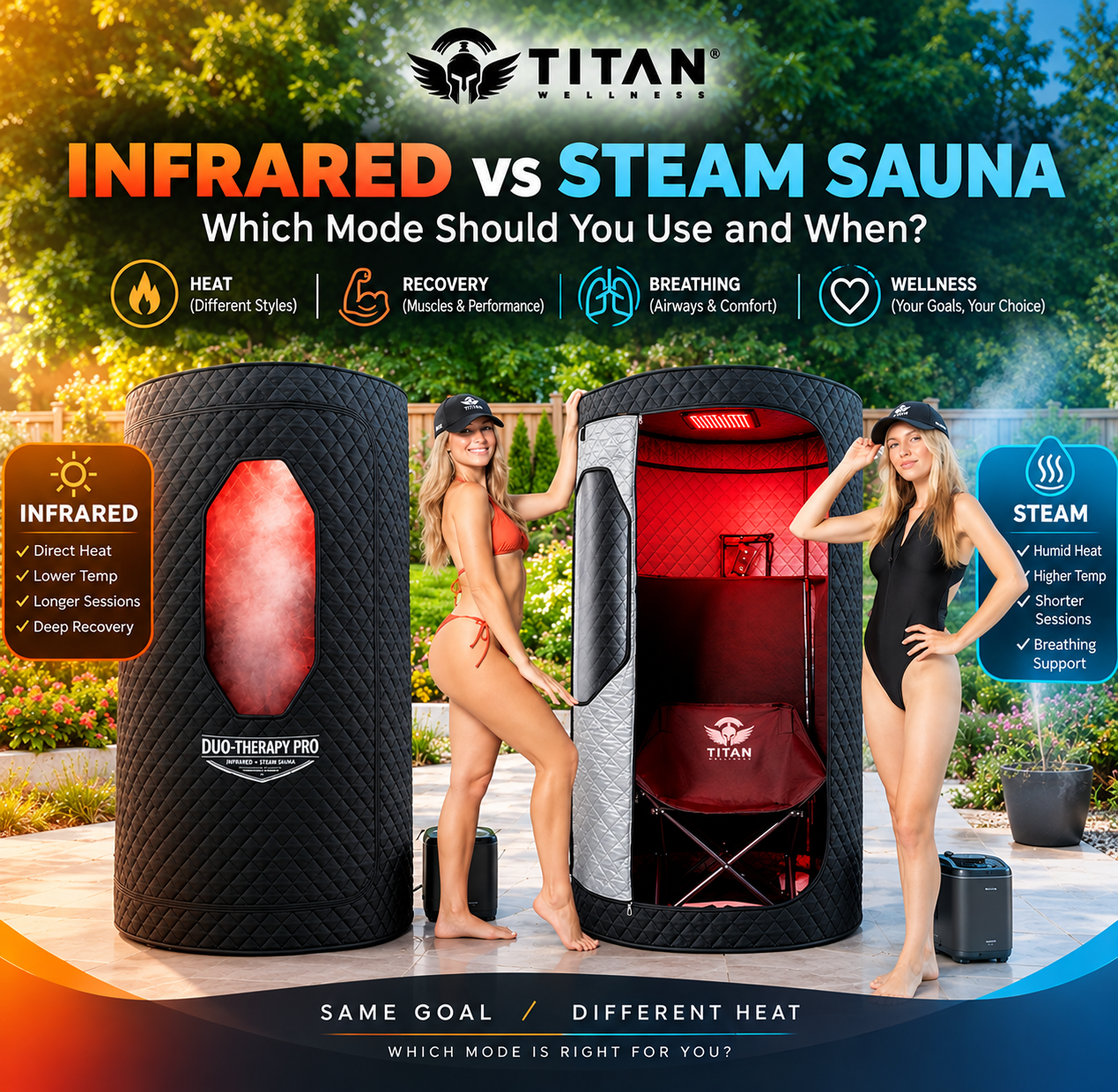
Infrared vs Steam Sauna: Which Mode Should You Use and When?
- October 12, 2026
How to Choose a Cold Plunge Chiller: 7 Specs That Actually Matter

- October 1, 2026
Common Cold Plunge Chiller Problems (and How to Avoid Buying a Bad One)
- September 30, 2026
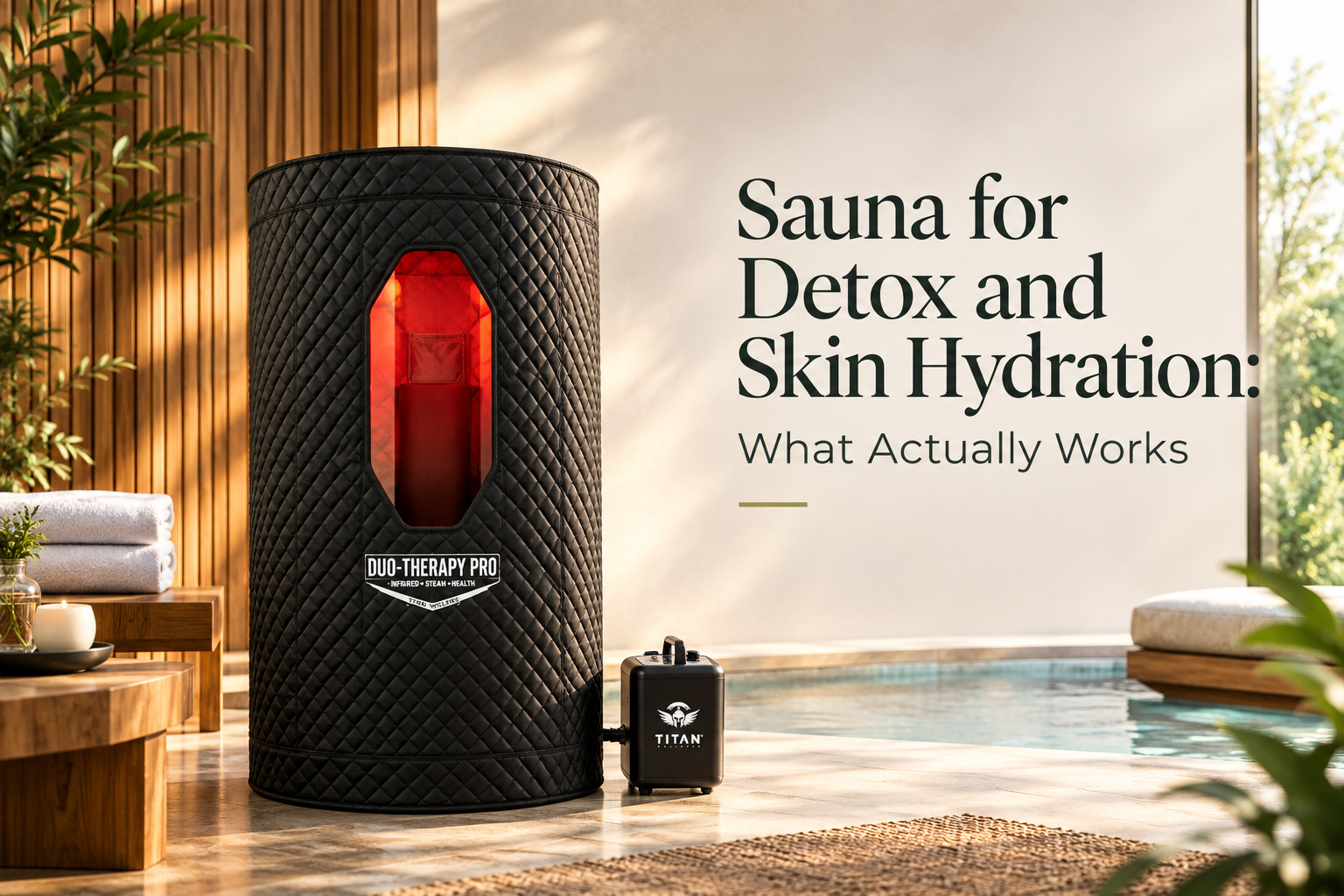
Sauna for Detox and Skin Hydration: What Actually Works
More Blogs
Recent Blogs
Infrared vs Steam Sauna: Which Mode Should You Use and When?
- October 14, 2026
Infrared vs steam sauna comes down to heat style. Infrared warms the body directly at lower air temperatures, which suits longer, calmer sessions. Steam wraps the body in humid heat, which suits shorter, more intense ones. Research has not shown that either type is healthier, so the better mode is the one a person will use consistently. What Is the
Read More
How to Choose a Cold Plunge Chiller: 7 Specs That Actually Matter
- October 12, 2026
Here’s the thing about choosing a cold plunge chiller (often called an ice bath chiller) for home use: most people get stuck comparing tub size, price, and how good the unit looks. Fair enough, but none of that decides whether you’ll still be happy with it three months later. Seven specs do. BTU cooling capacity and horsepower tell you how
Read More
Common Cold Plunge Chiller Problems (and How to Avoid Buying a Bad One)
- October 1, 2026
Most cold plunge chiller problems start with a mismatch. The chiller doesn’t suit the tub, the climate, the power supply, or the water it has to keep clean. Buyers who check those four things before purchase sidestep many failures. This guide walks through the common problems and their causes. It also covers the checks that prevent them. What Are the
Read More
Sauna for Detox and Skin Hydration: What Actually Works
- September 30, 2026
Sauna sessions don’t detox the body, not in the medical sense anyway. The liver and kidneys handle that work. What sauna heat actually does is far more specific: it improves circulation, clears pores temporarily, and, depending on the type of sauna, can genuinely support skin hydration. Steam works better for dry skin, while infrared leans more towards circulation and recovery.
Read More