
- October 26, 2026
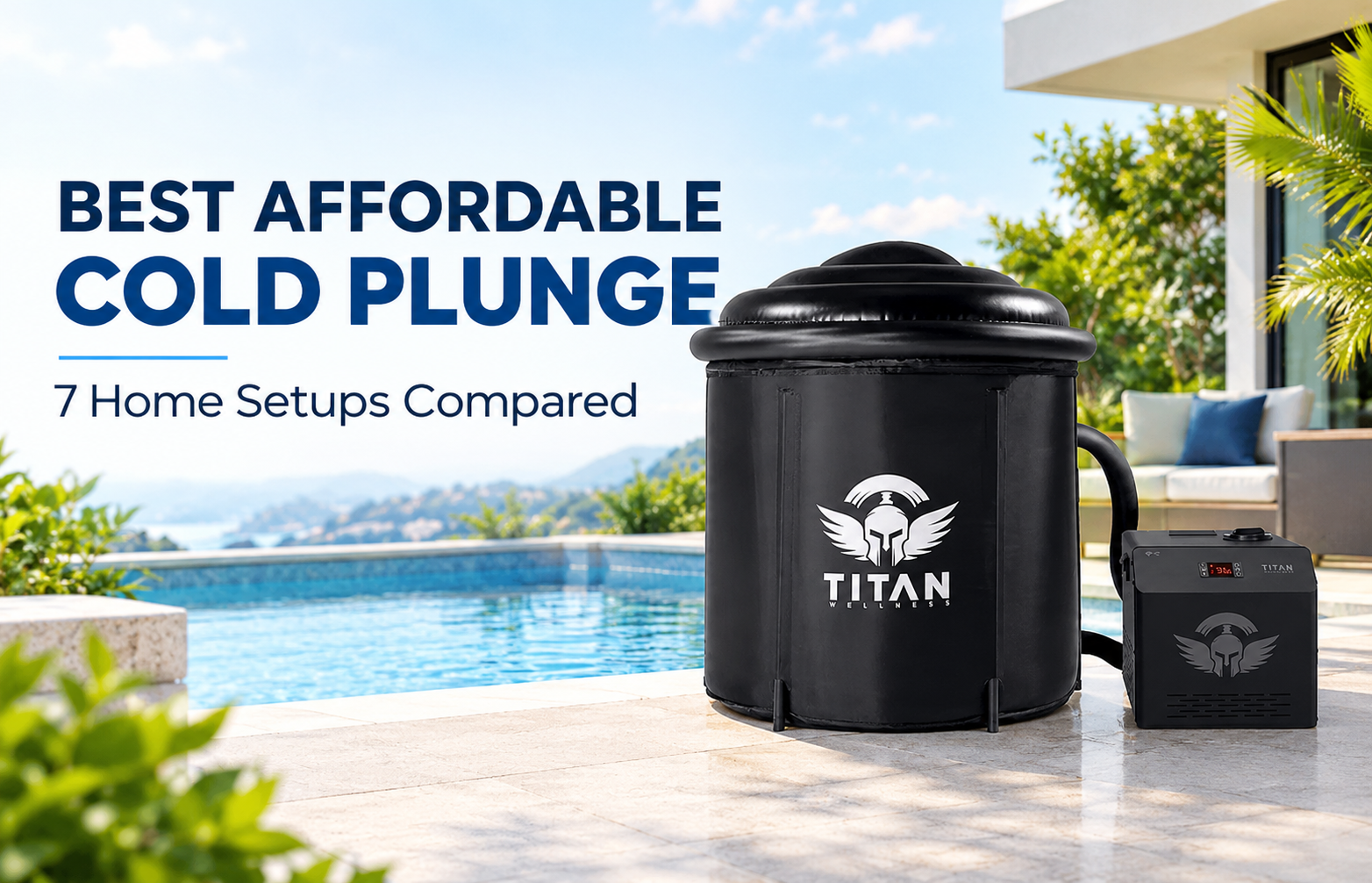
The best affordable cold plunge for home use are generally an inflatable tub + chiller. That pairing keeps the water cold without ice runs, and it costs far less than a hard-shell tub. Titan Wellness has seven setups using this concept, starting from $578 and going up to $4,190 in price.
Three factors decide which one fits:
- Budget: The Bravo tub and chiller package is priced starting at $578, the lowest complete system price.
- Climate: If you live in warmer areas, a more powerful chiller is required so the tub should not be selected before the chiller.
- Safety: Cleveland Clinic advises staying above 40°F and keeping sessions under five minutes.
The sections below take these factors one at a time, starting with which setup suits which buyer.
What is the best affordable cold plunge for home use?
For most buyers, the Bravo tub and chiller bundle is the best affordable cold plunge for home use. It’s the most affordable full setup in Titan’s range, and it accommodates users up to 6’9″. For buyers wanting more space or a variation, there are four other variants, all using 4-inch military-grade drop-stitch PVC that can work indoors and outdoors.
Matching the setup to the need keeps the choice simple:
- Small space or first purchase: Bravo.
- More leg room: Bravo XL or Triumph XL.
- Seated comfort: Atlas, which has a built-in inflatable seat.
- Permanent look: Apex Acrylic.
- Already own a tub: The 1/3 HP chiller alone.
How much does a cold plunge cost at home?
At Titan, a home cold plunge costs from $578 for a chiller alone to $2,990 for an acrylic hard-shell bundle. Titan also offers financing for qualified customers, including 12-month 0% APR and plans up to 36 months, with the Bravo bundle as low as $16 per month on the longest plan.
| Setup type | Price range (from) | Ice needed |
| Chiller only (1/3 HP) | $498 | No |
| Inflatable tub + chiller | $578 to $1,297 | No |
| Hard-shell tub + chiller (Apex) | $2,990 | No |
One detail stands out in the pricing. The Bravo bundle costs $578, and the chiller alone costs $498. The tub, lid, and insulated setup add only about $80. Bundles therefore make the tub nearly free compared with buying the chiller separately.
Does a home cold plunge need a chiller?
No. A tub of cold tap water or ice can work, but regular users usually save money with a chiller. Cleveland Clinic notes that cold tap water can meet some of the same goals, and that adding bags of ice makes the water colder. The tradeoff is ice cost and effort.
Titan estimates that a session uses 15 to 40 pounds of ice at about $3 per 10 pounds. The table below uses those figures at five plunges a week. It also subtracts the 1/3 HP chiller’s estimated running cost of $0.50 to $0.80 per day.
| Scenario | Ice per session | Weekly ice cost | Weekly chiller power | Payback on a $498 chiller |
| Lighter ice use | 15 lb | $22.50 | $3.50 to $5.60 | About 6 to 7 months |
| Heavier ice use | 40 lb | $60.00 | $3.50 to $5.60 | About 2 months |
Titan’s own estimate of three to four months falls right between those two cases. Add electricity to the math and payback stretches from roughly two months to seven. Buyers who plunge once or twice a week might find ice does the job just fine. Daily users are a different story, since they hit break-even a lot sooner.
Inflatable vs. hard-shell cold plunge: which is better on a budget?
An inflatable cold plunge costs far less and stores easily. A hard-shell costs more and looks permanent. Titan’s inflatable bundles run $578 to $1,297. The Apex Acrylic bundle starts at $2,990, about 2.3 times the price of the most expensive inflatable.
- Inflatable (Bravo, Triumph, Atlas): Light enough to move around, and sized to fit a patio, garage or spare room. The drop-stitch PVC holds its shape once it’s filled.
- Hard-shell (Apex): Acrylic walls, an ergonomic fit for full-body immersion, and a fixed spot in a home gym or backyard.
Renters and first-time buyers often start with an inflatable. Buyers with a dedicated space may prefer the acrylic tub.
Placement matters too. Inflatables suit spaces where the tub may move or come down for storage. Hard-shells suit spots where the tub stays put. Both need a level surface and a nearby outlet for the chiller.
Which 7 affordable cold plunges were compared?
The seven Titan setups run from $578 to $2,990. The picks below are compared based on specs, current pricing, and support. Both Titan chillers cool water down to 37°F and both bundles are backed by a 2-year warranty as well as 30-day returns.
| Pick | Type | From | Best for | Notable feature |
| 1/3 HP Universal Chiller | Chiller only | $498 | Owners of an existing tub or DIY builds | 815W, WiFi control, 3-stage filtration with UV |
| Bravo + Chiller | Inflatable | $578 | First-time buyers, tight spaces | Compact and light; fits users up to 6’9” |
| Bravo XL + Chiller | Inflatable | $667 | Extra room on a small budget | Larger design with strong insulation |
| Triumph + Chiller | Inflatable | $948 | Daily indoor or outdoor use | 4″ drop-stitch PVC, angled back |
| Atlas + Chiller | Inflatable | $1,297 | Seated plunging | Built-in inflatable seat |
| Triumph XL + Chiller | Inflatable | $1,297 | Taller users, full leg immersion | Extra-large interior |
| Apex Acrylic + Chiller | Hard-shell | $2,990 | Permanent home-gym install | Acrylic tub with ergonomic fit |
Choosing between them comes down to three questions. How tall is the user? How hot does the space get? Will the tub stay in one spot? Tall users lean toward the XL models. Hot spaces call for a stronger chiller. A fixed spot suits the Apex. Buyers who already own a tub can skip the bundle and start with the chiller.
What size chiller does a hot climate need?
Climate should decide the chiller size before the tub does. Titan notes that stronger units cool off more rapidly and hold low temperatures longer, especially with bigger tubs or in hot, humid air. Many buyer guides rank tubs and treat the chiller as an add-on. In hot regions, that order can be backward.
| Chiller | Power | Suited climate | From |
| 1/3 HP | 815W | Up to about 85°F | $677 |
| 1/2 HP Pro | 1141W | Above 85°F | $1,128 |
| 1 HP Pro Max | 2600W | Extreme heat – also heats to 104°F | $1,539 |
Bigger tubs hold more water, and more water takes longer to cool. A 1/3 HP unit may be all you need for a compact tub in a mild garage. Put the same unit on a large tub on a hot patio, and it has to run longer to reach the same set point. Sizing up costs more at checkout but can reduce running time later.
Every size comes from Titan’s 2026 All-in-One Gen 5 lineup, so you get the same core features whichever you choose:
- App controlled: set and monitor your water temperature from your phone.
- UV sanitation: helps keep the water clean between plunges.
- Advanced 3-stage filtration: filters the water as it circulates.
- Dual-pump, plug-and-play system: simple to set up and ready to run.
All three plug into a standard 110V US outlet. Titan puts running costs at roughly $0.50 to $1.50 a day, depending on the model and conditions.
How do you keep cold plunge water clean and mold-free?
Most of the work comes down to three things: filtration that never stops, UV sanitation, and changing filters when you’re supposed to. Water that sits unfiltered is where odor and growth usually begin. The Gen V chillers from Titan have the added benefit of keeping the water in motion 24/7, constantly pushing it through both a sediment filter and a 20-micron filter (and UV sanitation on top).
- Filtration: Two different filter stages catch debris before it can settle.
- Sanitation: UV is built in, so the water gets treated as it circulates.
- Replacement filters: A 4-pack starts at $39. The manual has the change schedule.
- Lid: Put it back on between sessions. Less dust, less debris.
Clean water makes sessions nicer too. And filters are the cheapest part of the system, so changing them on time is the easiest habit to keep.
How cold, how long, and who should avoid a cold plunge?
Cleveland Clinic advises keeping every session to 5 minutes or less, with the water staying above 40°F. Beginners can start somewhere between 50°F and 59°F, for one to two minutes, once or twice a week. A thermometer is a simple way to check the temperature.
A chiller that goes down to 37°F is useful mainly because it holds a steady set point. Most beginners should set it well above that low end, and the app lets users adjust it.
According to Cleveland Clinic, people with heart disease, high blood pressure, diabetes and pregnancy should consult a physician first. As well as individuals diagnosed with peripheral neuropathy, poor circulation, venous stasis or cold agglutinin disease. It also flags timing: a plunge within four hours of a workout can blunt muscle growth, so rest days seem best for recovery plunges.
Quick answers
How much does it cost to run a cold plunge chiller?
Titan estimates $0.50 to $0.80 per day for the 1/3 HP, up to $1.00 to $1.50 per day for the 1 HP, based on typical US rates and moderate conditions.
Can a cold plunge be financed?
Titan lists 0% APR financing for 12 months and offers longer terms up to 36 months. HSA/FSA payment is listed as an option, and eligibility depends on the plan.
RECENT BLOGS
- November 3, 2026
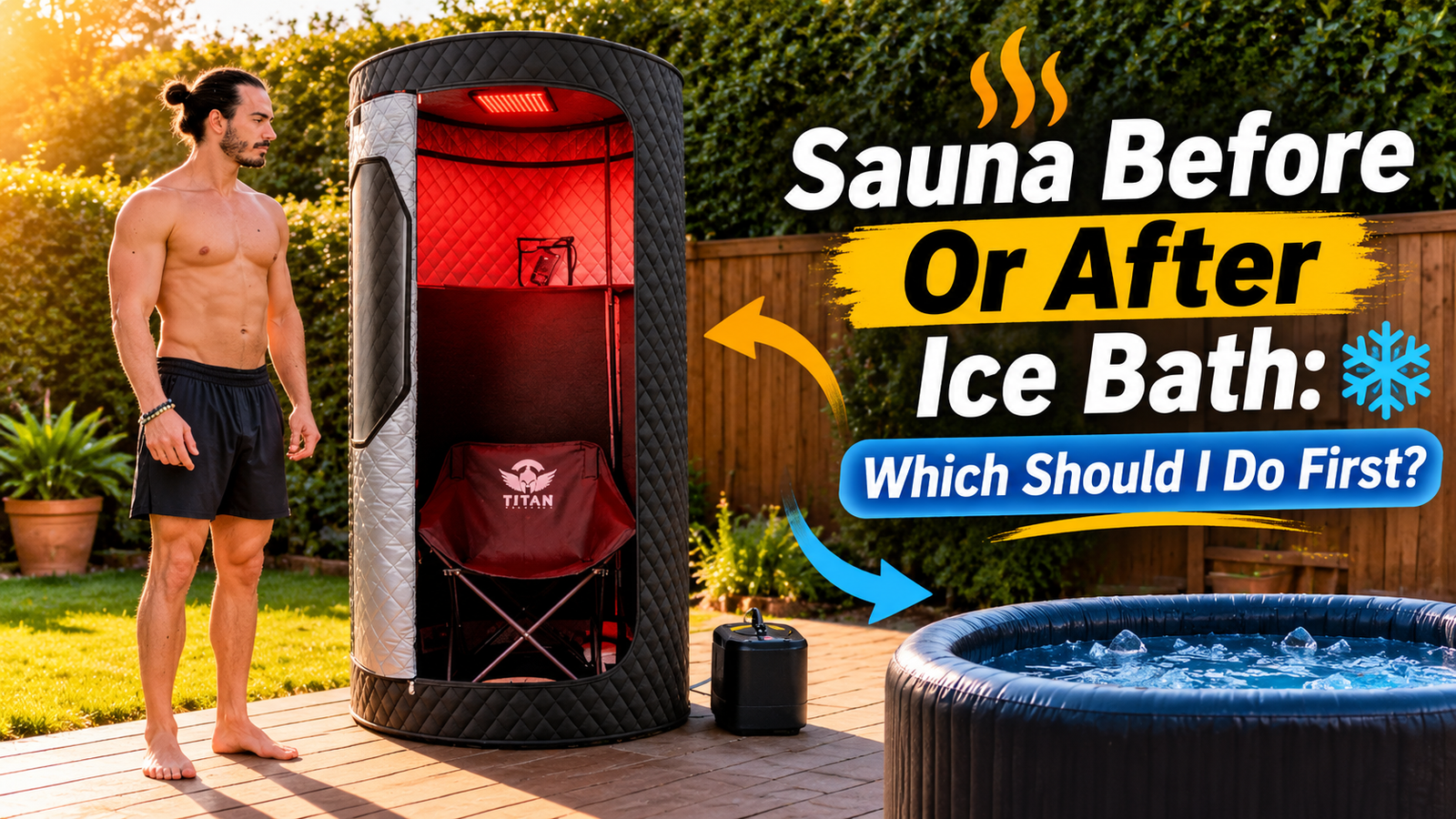
Sauna Before Or After Ice Bath: Which Should I Do First?
- November 2, 2026
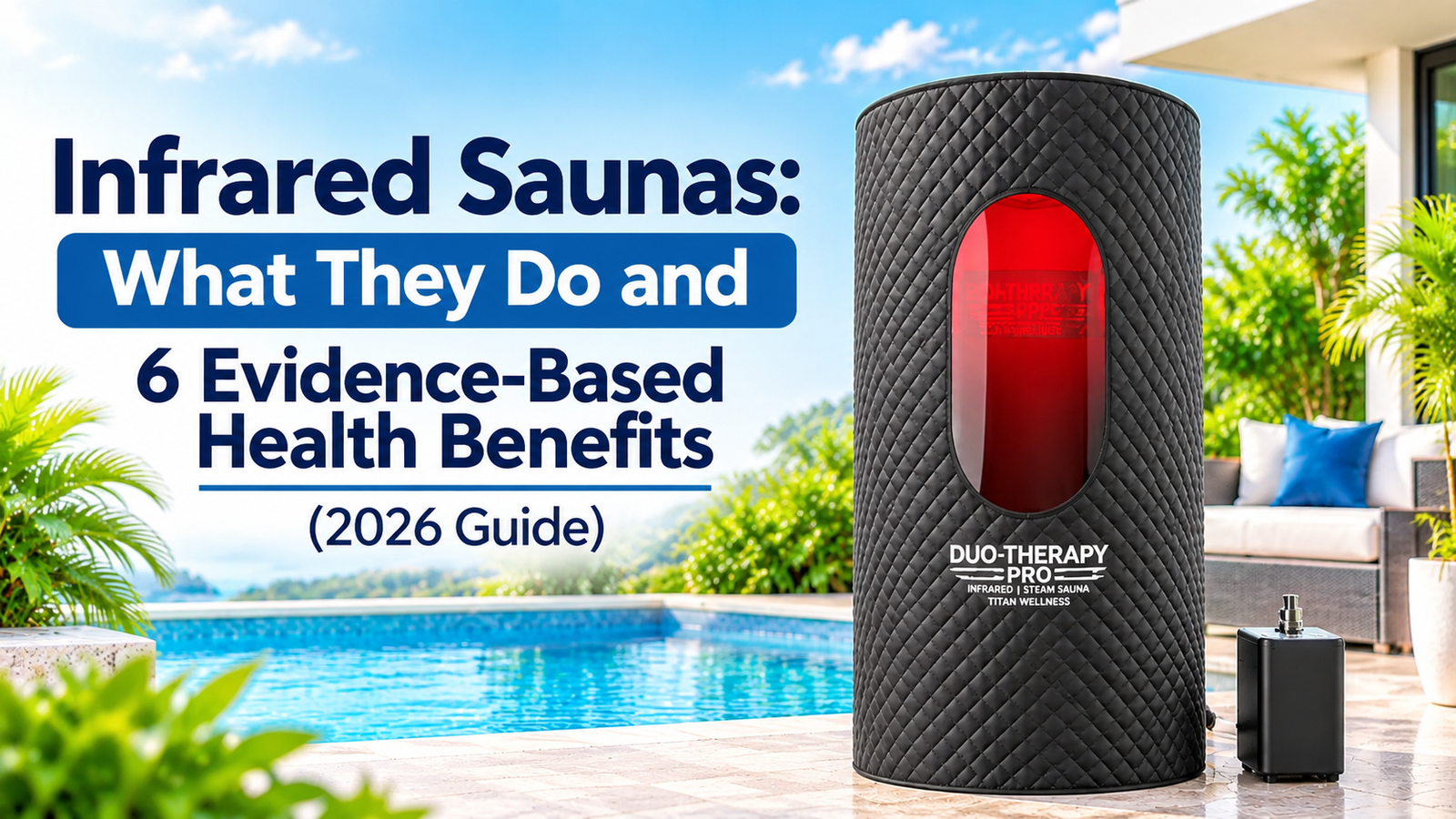
Infrared Saunas: What They Do and 6 Evidence-Based Health Benefits (2026 Guide)
- October 26, 2026
Best Affordable Cold Plunge for Home Guide: 7 Picks Compared
- October 14, 2026
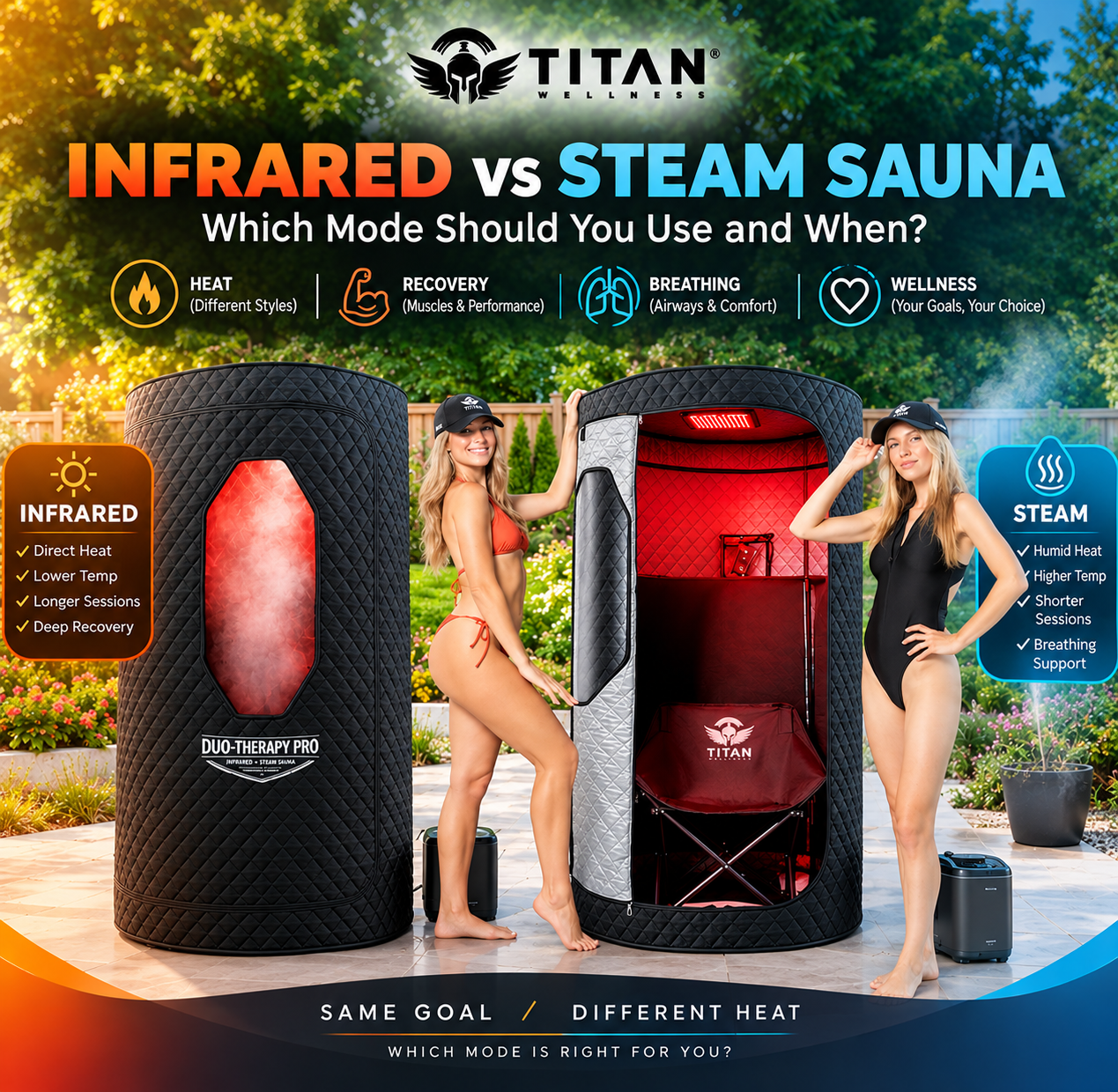
Infrared vs Steam Sauna: Which Mode Should You Use and When?
More Blogs
Recent Blogs
Sauna Before Or After Ice Bath: Which Should I Do First?
- November 3, 2026
Most healthy adults start with the sauna and finish with the cold plunge. Heat first makes the cold easier to enter, and ending on cold is the usual routine in contrast therapy. Here’s the useful part: the order isn’t fixed. It moves with the goal, the clock and whatever came before, like a workout. Researchers haven’t lined the two sequences
Read More
Infrared Saunas: What They Do and 6 Evidence-Based Health Benefits (2026 Guide)
- November 2, 2026
An infrared sauna warms your body directly with infrared light instead of heating the air around you. That’s why you can sweat comfortably even when the air temperature is only about 110°F to 140°F. Research on infrared saunas is also growing fast, and it points to some real upsides. Heart health, muscle recovery, and pain relief have the strongest support
Read More
Best Affordable Cold Plunge for Home Guide: 7 Picks Compared
- October 26, 2026
The best affordable cold plunge for home use are generally an inflatable tub + chiller. That pairing keeps the water cold without ice runs, and it costs far less than a hard-shell tub. Titan Wellness has seven setups using this concept, starting from $578 and going up to $4,190 in price. Three factors decide which one fits: The sections below
Read More
Infrared vs Steam Sauna: Which Mode Should You Use and When?
- October 14, 2026
Infrared vs steam sauna comes down to heat style. Infrared warms the body directly at lower air temperatures, which suits longer, calmer sessions. Steam wraps the body in humid heat, which suits shorter, more intense ones. Research has not shown that either type is healthier, so the better mode is the one a person will use consistently. What Is the
Read More