
- June 15, 2026
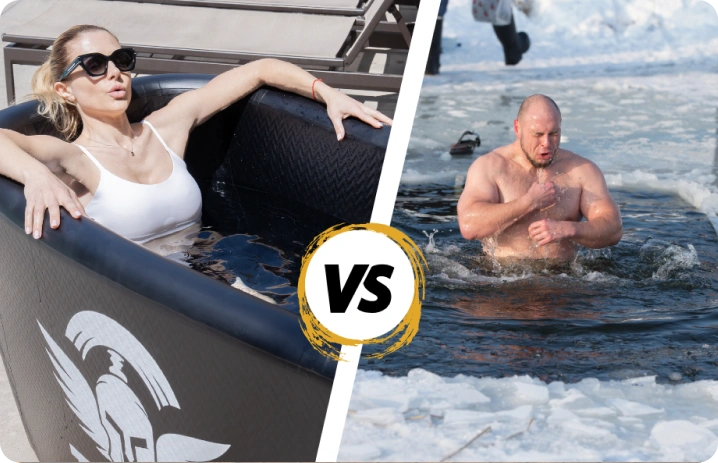
Most people confuse a Cold Plunge with an Ice Bath. For many of them, both of these seem the same, while they both have different benefits. If you have also been going back and forth to figure out the cold plunge vs ice bath difference, here’s the answer. Cold Plunge and Ice Bath both get your body in cold water. The difference is that Cold Plunge uses a built-in chiller to keep the water at a consistent temperature. This makes it more comfortable for longer sessions, around 10 to 15 minutes. An ice bath is usually colder because you add ice directly to the water. Because of the extreme cold, people usually stay in for only 3 to 6 minutes. Both use CWI (cold water immersion), but a cold plunge offers a more convenient and consistent experience for regular use. An ice bath is more intense. People use both these terms interchangeably and confuse it allot. Let’s figure it out more collaboratively so you can understand which one is suitable for your goals and body.
What is an Ice Bath?
An ice bath is the original and very first form of cold water therapy. It involves filling a tub or container of water with ice to make it cold. Athletes and people into fitness have been using ice baths for years to help recovery post-workouts. It is usually more intense and colder, which is why people can not stay in water for more than 6-7 minutes. You can not control the temperature. The hardest part with an ice bath is its setup. You either have to have a lot of ice or need to buy it before every session, and still, the water temperature changes as the ice melts. So you can not even use it for longer sessions, even if you want to. So, in case you wish to do it daily, you might need extra time for setup, but still, you will be left with very little time for water. You might have to do an ice bath every day with different temperatures. You never really get to control water temperatures as per your body and goals’ needs. You will not even realize when 50°F turns to 58°F, and you will not be able to experience what you actually want to experience.
What is a Cold Plunge?
Now, a cold plunge is where you have complete control over the water temperature. Instead of adding ice and hoping the water reaches the right level, a cold plunge uses a built-in chiller to cool the water and keep it at your chosen temperature.
This means every session feels the same. If 50°F works best for you, the water stays at 50°F from start to finish. There is no need to buy ice, wait for the water to cool down, or deal with temperatures changing halfway through your session.
Most cold plunge systems also include water filtration, so the water stays cleaner for longer. The biggest benefit, though, is convenience. The water is always ready when you are. You simply get in and start your session. For people who want to make cold therapy a regular habit, a cold plunge is usually the easier and more practical option.
Systems like the Titan Cold Plunge have built a strong following because of exactly this. You set your preferred temperature once, and the system maintains it. Whether you want a session at six in the morning or late at night after training, the water is ready. You just get in.
Cold Plunge vs Ice Bath: The Key Differences
Cold plunges and ice baths both use cold water immersion, but the experience is very different. This quick comparison table highlights the key differences in temperature control, convenience, maintenance, cost, and overall usability to help you choose the option that best fits your goals.
| Feature | Cold Plunge | Ice Bath |
| Water Temperature | Controlled and consistent | Changes as ice melts |
| Temperature Range | Adjustable (typically 37°F–59°F) | Depends on the ice-amount |
| Setup Time | Ready whenever you are | Requires filling the tub and adding ice |
| Maintenance | Built-in filtration in most systems | Frequent draining and cleaning |
| Session Length | Usually 5–15 minutes | Usually 3–6 minutes |
| Convenience | Very high | Moderate to low |
| Long-Term Cost | Higher upfront investment | Ongoing ice expenses |
| Water Quality | Cleaner due to filtration | Can become dirty faster |
| Best For | Regular cold therapy users | Beginners and occasional users |
| Consistency | Same experience every session | Different experience every session |
Cold Plunge vs Ice Bath Temperature
The effective range for cold therapy generally falls between 37°F and 59°F (3°C to 15°C). Where you land within that range should depend on your experience level and goals.
- Beginner (50°F–59°F): Uncomfortable but manageable. Real benefits without going to extremes.
- Intermediate (45°F–50°F): Where most regular users settle after building tolerance. Noticeably more intense.
- Advanced (37°F–45°F): Reserved for experienced practitioners who have built up significant tolerance over time.
The Titan Wellness Cold Plunge System gives you precise control over your temperature – you set 52°F, and you get 52°F, every time – which is something no ice bath can offer.
Ice Bath vs Cold Plunge for Muscle Recovery
Recovery is the main reason most people first get interested in cold-water immersion, and the interest is well-founded. Research consistently points to cold exposure as a useful tool for managing delayed onset muscle soreness and supporting faster recovery between training sessions.
Both ice baths and cold plunges can support these outcomes – the mechanism is the same either way. What’s different is how realistic it is to actually maintain the habit consistently.
When cold therapy requires meaningful logistical effort every time – especially on days when you’re already tired and sore – sessions start getting skipped. Gradually, quietly, the routine falls apart. A system that’s ready when you are removes that friction entirely. That’s the real reason many serious athletes end up choosing the Titan Cold Plunge over continuing with a DIY setup.
How Long Should You Stay In?
Duration should match your water temperature:
- 50°F–59°F: 5 to 15 minutes
- 45°F–50°F: 3 to 10 minutes
- Below 45°F: 2 to 5 minutes
Longer is not automatically better. Cold-water immersion is a deliberate, controlled stimulus – not an endurance contest. Beginners should start conservatively and build gradually. Pay attention to how your body responds, and get out if you feel numb, disoriented, or genuinely distressed.
Cold Plunge Tub vs DIY Ice Bath: Which Is Right for You?
A DIY ice bath is good if you are new and don’t want to spend much money. However, it might require buying a lot of ice, in case you don’t have that quantity at home. Also, it can be hectic during setup. Cold Plunge is more convenient if you are serious about cold water therapy and would like to do it wherever, whenever you want. It helps you with clean water at specific temperature settings to help you stay consistent and stay longer in water. Rest, it completely depends on your priorities and goals.
Why More People Are Choosing Dedicated Systems
Cold water is no longer gatekept by professional athletes and elite training facilities. Anyone can experience it now, even from anywhere. People who want to do it at home now have access to systems such as Titan Wellness Cold Plunge Systems, which used to exist only in high-end sports centers at premium prices. Along with this availability and access, social media has played such an important role in making people aware of this technique. Fitness influencers shared about their personal experiences and do plunges on live sessions. This encourages the audience to do cold plunges in dedicated systems to get benefits by staying consistent. And ice baths are very hectic when it comes to setup. You waste more time just setting up, and once you get into the water, it turns warm really quickly, so you don’t really get that experience that you want to feel. Whereas dedicated temperature-controlled systems allow you to do it for a specific time period on a specific temperature setting.
Final Verdict
The cold plunge vs ice bath debate isn’t about which one gets the water colder. It’s about whether the method you choose actually supports a consistent, sustainable routine – or quietly creates enough friction to eventually undermine it.
An ice bath works. It’s a proven, legitimate method and a solid low-cost starting point. A cold plunge gives you something an ice bath structurally can’t: RELIABILITY. Consistent temperature, cleaner water, zero prep. If cold therapy is something you plan to do seriously over the long haul, a dedicated system is almost always worth the investment. That’s the real reason people who start with a DIY ice bath end up upgrading to a Titan Cold Plunge – and genuinely don’t look back.
FAQs
Q. Is a cold plunge the same as an ice bath?
A. No. A cold plunge uses a built-in chiller for precise, consistent temperature control. An ice bath relies on manually added ice that varies throughout every session.
Q. What temperature should a cold plunge be?
A. Most people use 45°F to 59°F, depending on experience. Start warmer and work your way down gradually.
Q. Which is better for muscle recovery?
A. Both work through the same mechanism. Cold plunges tend to produce better long-term results simply because consistent access makes regular sessions far more realistic.
Q. How long should you stay in?
A. Between 3 and 15 minutes, depending on temperature. Start shorter and build from there.
Q. Is a DIY ice bath effective?
A. Yes – with the honest tradeoffs of inconsistent temperatures, more prep work, and higher maintenance that can chip away at consistency over time.
Q. Is a cold plunge worth the investment?
A. For regular users, almost always. The convenience alone tends to pay for itself in sessions you would have otherwise skipped.
RECENT BLOGS

- October 1, 2026
Common Cold Plunge Chiller Problems (and How to Avoid Buying a Bad One)
- September 30, 2026
Sauna for Detox and Skin Hydration: What Actually Works
- September 18, 2026
Top 5 Cold Plunge Chillers Under $2,000 (2026 Comparison)

- September 2, 2026
Top 10 Cold Plunge Chiller Companies in the USA (2026)
More Blogs
Recent Blogs
Common Cold Plunge Chiller Problems (and How to Avoid Buying a Bad One)
- October 1, 2026
Most cold plunge chiller problems start with a mismatch. The chiller doesn’t suit the tub, the climate, the power supply, or the water it has to keep clean. Buyers who check those four things before purchase sidestep many failures. This guide walks through the common problems and their causes. It also covers the checks that prevent them. What Are the
Read More
Sauna for Detox and Skin Hydration: What Actually Works
- September 30, 2026
Sauna sessions don’t detox the body, not in the medical sense anyway. The liver and kidneys handle that work. What sauna heat actually does is far more specific: it improves circulation, clears pores temporarily, and, depending on the type of sauna, can genuinely support skin hydration. Steam works better for dry skin, while infrared leans more towards circulation and recovery.
Read More
Top 5 Cold Plunge Chillers Under $2,000 (2026 Comparison)
- September 18, 2026
The best cold plunge chillers under $2,000 are the Titan Wellness Universal Chiller ($498–$1,190), the Nuvio Recovery Chiller ($599.99), the Polar Dive USA V5 ($499), The Pod Company Chiller 2.0 (~$500), and the Vital+ Ultra X2 (~$500+). Each connects to a tub a buyer already owns, cools to 37–39°F, and replaces the daily cost and mess of bagged ice. The
Read More
Top 10 Cold Plunge Chiller Companies in the USA (2026)
- September 2, 2026
The best cold plunge chiller companies in the USA in 2026 are Titan Wellness, The Pod Company, Vital+, Polar Dive USA, Brooklyn Plunge, Plunge, Sun Home, Nordic Wave, Renu Therapy, and Ice Barrel. Titan Wellness leads the group, cooling water to 37°F with WiFi app control, UV sanitation, and 20-micron filtration, starting at $498 with US-based phone support and a
Read More