
- June 16, 2026
Let’s be upfront about something: cold plunging has a bit of an image problem right now. Between the Instagram reels of influencers gasping dramatically and the breathless claims that 3 minutes in ice water will basically turn you into a superhero, it’s hard to know what’s real and what’s just noise. It’s very obvious for people to have doubts and questions in mind, like: Does cold water therapy actually have some science-backed benefits, or is it just some new trendy thing?
The answer is: Yes, Cold Plunge therapy does have scientific benefits. Research shows that cold water actually helps in reducing muscle soreness up to 20-30% and treats pain post-workout. Along with that, it boosts alertness and makes you feel refreshed and energized. Other claims in trend, a few of them are scientifically proven, few are still being studied.
So, here is this guide, and we will understand in detail what is strongly claimed and what remains uncertain.
What Is a Cold Plunge, Exactly?
A cold plunge is simply dipping your whole body in cold water, for a short period of time – typically somewhere between 39°F and 59°F (4°C to 15°C). That’s it. No special technique or certification required.
It’s different from splashing cold water on your face or finishing your shower on a cooler setting. The idea is that enough of your body is soaked for long enough to actually trigger a physiological response.
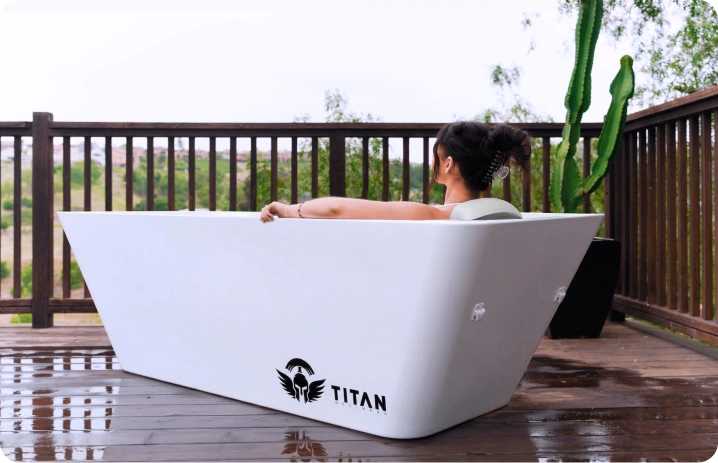
Cold water therapy isn’t something new. Athletes have been using ice baths for years to recover after tough training sessions. The biggest difference today is convenience. What once required bags of ice and access to a special facility can now be done at home and with ease. Modern cold plunge systems make it super easy to enjoy cold water therapy whenever you want. All without the hassle of preparing an ice bath every time. Many people use a Titan Cold Plunge system because it provides at-home, precise temperature control and a more consistent experience compared to filling a bathtub with ice. You can even use it at your fitness space or just anywhere.
For more wellness insights and recovery education, you can explore our wellness resource center.
What Happens to Your Body When You Get In
The first few seconds are not pleasant. Your blood vessels constrict, your heart rate spikes, and your breathing goes shallow and fast. Your body is essentially doing what it’s designed to do when it detects something cold and potentially threatening.
But here’s where it gets interesting. Over time, with regular exposure, your body gets better at handling that response. You adapt. The shock becomes more manageable, and some of the underlying physiological changes, the hormone shifts, the circulation changes – may actually be doing something useful. This is one reason many researchers are interested in cold water immersion benefits beyond athletic recovery.
Post Workout Recovery
One of the most common questions people ask is: Does a cold plunge reduce inflammation? Does it help you recover? And, if there’s one area where the research is pretty consistent, it’s muscle recovery.
After a hard training session, your muscles go through microscopic damage. That’s normal. It’s literally how they grow. But the soreness that follows, especially that deep achiness that kicks in a day or two later (delayed onset muscle soreness, or DOMS), can be rough.
Adding on, cold water immersion has been shown to meaningfully reduce that soreness – studies point to a 20-30% reduction in some cases. For anyone who trains regularly, that’s nothing. Getting back to feeling normal faster means you can train more consistently.
That said, there’s a nuance worth knowing: some inflammation is actually necessary for muscle adaptation. If you’re trying to build strength, jumping in a cold plunge immediately after every single lifting session might work against you. Many coaches now suggest being strategic about timing – saving it for high-volume training days or competition recovery rather than making it an automatic post-workout habit.
If you’re interested in building a complete recovery routine, visit our recovery education hub.
Mental Health Benefits
This one surprised a lot of researchers. One of the most interesting areas of research involves cold plunge benefits for mental health.
Cold exposure causes your body to release norepinephrine – sometimes in significant amounts. Some studies also suggest up to 300% above baseline. Norepinephrine plays a major role in focus, attention, and mood. Dopamine levels also rise.
What this means in practice: many people report feeling genuinely better after a cold plunge. More alert, more centered, less anxious. And that’s not just a placebo.
There’s also something psychological happening. Voluntarily doing something uncomfortable and getting through it – builds a kind of mental confidence that’s hard to manufacture any other way. You proved to yourself you could do it. That tends to stick.
What About Immunity?
Another popular topic is cold plunge benefits for immune system health.
Some studies have found that regular cold exposure increases certain immune markers and white blood cell counts. One fairly well-known study found that people who took cold showers reported fewer sick days than the control group.
The leading theories involve improved circulation, hormonal adaptation, and the way regular cold stress trains your body’s overall stress-response systems.
But (and this is important) cold plunging is not a substitute for sleeping well, eating reasonably, exercising, and staying hydrated. It might give your immune system a nudge. It is not a shield.
Cold Plunges and Weight Loss: Tempered Expectations
Many people wonder about the connection between cold plunge and weight loss. Here’s where social media has gotten a bit carried away.
Cold exposure does activate brown fat – a type of fat tissue that burns energy to generate heat rather than storing it. That process (thermogenesis) does burn calories. So the mechanism is real. The practical effect, though, is modest. A cold plunge session isn’t going to meaningfully move the needle on its own. If you’re hoping cold water will compensate for other habits, you’ll be disappointed.
Where it might actually help is as one piece of a bigger picture – better sleep, more energy for movement, reduced stress eating. The indirect effects may add up to more than the direct calorie burn.
The Skin Rejuvenation
Many users also report cold plunge benefits for skin.
Cold water temporarily tightens blood vessels near the skin surface. This can reduce puffiness, give a brief “refreshed” glow, and some people notice less redness after exercise. It’s real. It’s also temporary. Cold plunging isn’t skincare – it’s just a nice side effect.
Cold Plunge vs. Cold Shower: Is There a Difference?
People often ask about cold plunge vs cold shower benefits.
Yes, and it matters if you’re doing this for recovery.
A cold shower is genuinely useful, especially for alertness and building tolerance to discomfort. The barrier to entry is low – you literally already have a shower.
But full-body immersion in a cold plunge gets more of your surface area into the cold, typically at a more consistent and controlled temperature. The physiological response is stronger. For recovery purposes, especially, the difference is noticeable for most people.
If you’re just starting out, cold showers are a perfectly reasonable on-ramp. But if you’re doing this consistently and want to actually feel a difference, a dedicated cold plunge typically delivers more.
Learn more about available options through our cold therapy collection at Titan Wellness.
How Often Should You Actually Do It?
You don’t need to do it every day to get results. Most people land somewhere in the 2-5 sessions per week range, depending on what they’re going for.
- For general wellness, 2-3 times a week is plenty.
- For active recovery, 3-5 times a week works well for many athletes.
- For daily, totally fine for healthy individuals who’ve built up to it – just don’t assume more is automatically better.
The biggest mistake beginners make is trying to go too long or too cold right out of the gate. A few minutes at a moderate cold temperature is enough to get the response you’re after. Consistency over weeks and months matters more than any single heroic session.
A Few Honest Cautions
Cold plunging is generally safe for healthy adults. But it’s not for everyone.
If you have heart disease, uncontrolled high blood pressure, circulation disorders, or certain neurological conditions, talk to your doctor first. The cardiovascular response to cold immersion is real, and for people with underlying conditions, it can be more than the body should handle without medical guidance.
If you’re pregnant, check with your provider.
If you’re new to this: start slow, stay aware of how your body feels, and don’t let anyone convince you that suffering through it longer makes it more effective.
Why More People Are Choosing Titan Cold Plunge Systems
As cold therapy becomes more popular, equipment quality matters.
Many users choose Titan Wellness because of its focus on performance, reliability, and customer support.
Some reasons people consider a Titan Cold Plunge include:
- Trusted by 50,000+ users
- 1,800+ 5-star reviews
- Free Shipping From the USA
- 2-Year Nationwide Warranty
- 30-Day Returns
- Lifetime U.S.-Based Phone Support
- Fast Shipping From California
- Industry-leading quality control
- Lowest Price Guarantee
- 12-Month 0% APR Financing
- Pay with HSA/FSA and potentially save 30-40%
For people looking to make cold therapy a consistent part of their wellness routine, having dependable equipment can make a significant difference.
You can explore available models through our official product store at Titan Wellness.
The Bottom Line
Cold plunging isn’t magic. But it’s also not hype.
The strongest evidence backs it for recovery and reducing muscle soreness, improving mood and mental clarity, and building a kind of stress resilience that’s hard to get any other way. The immunity and metabolism benefits are promising but less definitive.
What it does require is consistency. A few minutes, several times a week, over a period of weeks – that’s where most people start noticing something real. Not one dramatic session. Just a habit.
FAQs
Q.What are the most legit benefits?
A. Reduced soreness, faster recovery, better mood, improved alertness, and stress resilience have the most research behind them.
Q.Does it reduce inflammation?
A. Yes – temporarily, and particularly well after exercise. Just don’t overdo it if you’re trying to build muscle.
Q.Is daily cold plunging safe?
A. For most healthy adults, yes. Start gradually and listen to your body.
Q.Cold shower or cold plunge?
A. Both work. Cold plunge gets you a stronger, more consistent effect – especially for recovery.
Q.Will it help with weight loss?
A. Modestly, indirectly. Don’t count on it as your main strategy.
RECENT BLOGS

- October 1, 2026
Common Cold Plunge Chiller Problems (and How to Avoid Buying a Bad One)
- September 30, 2026
Sauna for Detox and Skin Hydration: What Actually Works
- September 18, 2026
Top 5 Cold Plunge Chillers Under $2,000 (2026 Comparison)

- September 2, 2026
Top 10 Cold Plunge Chiller Companies in the USA (2026)
More Blogs
Recent Blogs
Common Cold Plunge Chiller Problems (and How to Avoid Buying a Bad One)
- October 1, 2026
Most cold plunge chiller problems start with a mismatch. The chiller doesn’t suit the tub, the climate, the power supply, or the water it has to keep clean. Buyers who check those four things before purchase sidestep many failures. This guide walks through the common problems and their causes. It also covers the checks that prevent them. What Are the
Read More
Sauna for Detox and Skin Hydration: What Actually Works
- September 30, 2026
Sauna sessions don’t detox the body, not in the medical sense anyway. The liver and kidneys handle that work. What sauna heat actually does is far more specific: it improves circulation, clears pores temporarily, and, depending on the type of sauna, can genuinely support skin hydration. Steam works better for dry skin, while infrared leans more towards circulation and recovery.
Read More
Top 5 Cold Plunge Chillers Under $2,000 (2026 Comparison)
- September 18, 2026
The best cold plunge chillers under $2,000 are the Titan Wellness Universal Chiller ($498–$1,190), the Nuvio Recovery Chiller ($599.99), the Polar Dive USA V5 ($499), The Pod Company Chiller 2.0 (~$500), and the Vital+ Ultra X2 (~$500+). Each connects to a tub a buyer already owns, cools to 37–39°F, and replaces the daily cost and mess of bagged ice. The
Read More
Top 10 Cold Plunge Chiller Companies in the USA (2026)
- September 2, 2026
The best cold plunge chiller companies in the USA in 2026 are Titan Wellness, The Pod Company, Vital+, Polar Dive USA, Brooklyn Plunge, Plunge, Sun Home, Nordic Wave, Renu Therapy, and Ice Barrel. Titan Wellness leads the group, cooling water to 37°F with WiFi app control, UV sanitation, and 20-micron filtration, starting at $498 with US-based phone support and a
Read More